

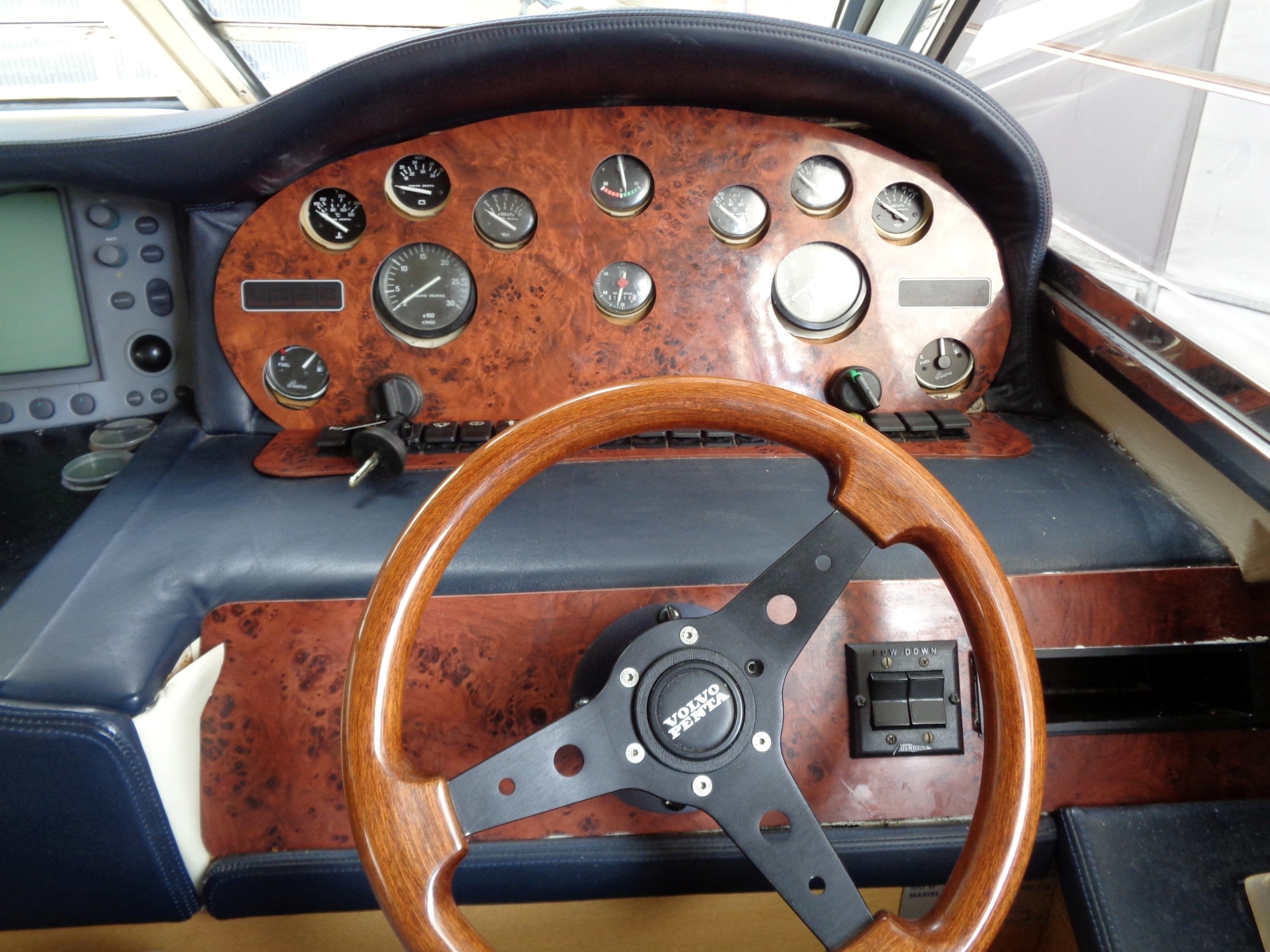
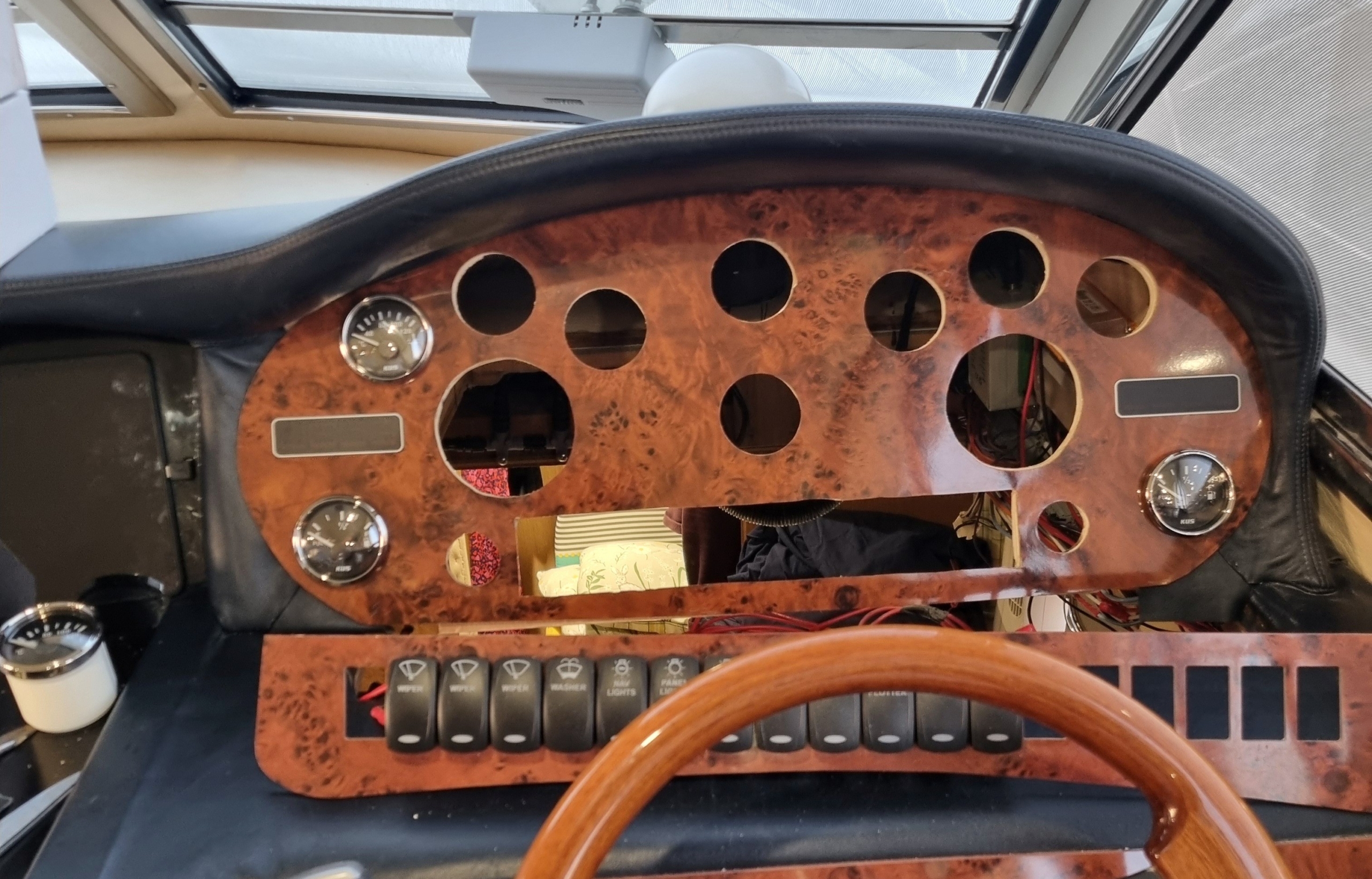
Although someone had fitted a more modern helm, the radar and plotter were ancient and they had made a very poor job of fitting the engine gauges. The walnut effect panel was not actually fixed in place, it just hung on the gauges, frequently falling down.


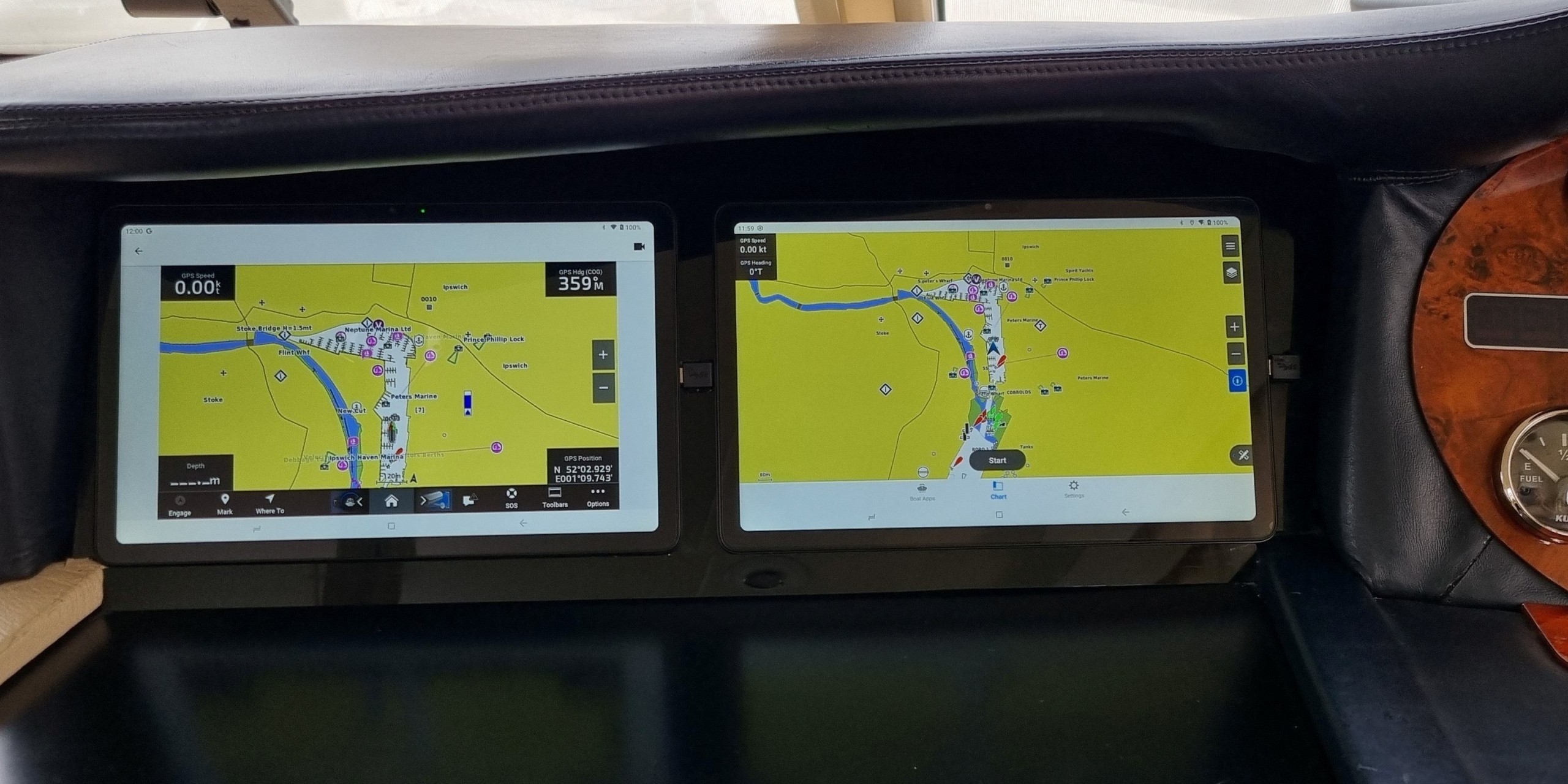
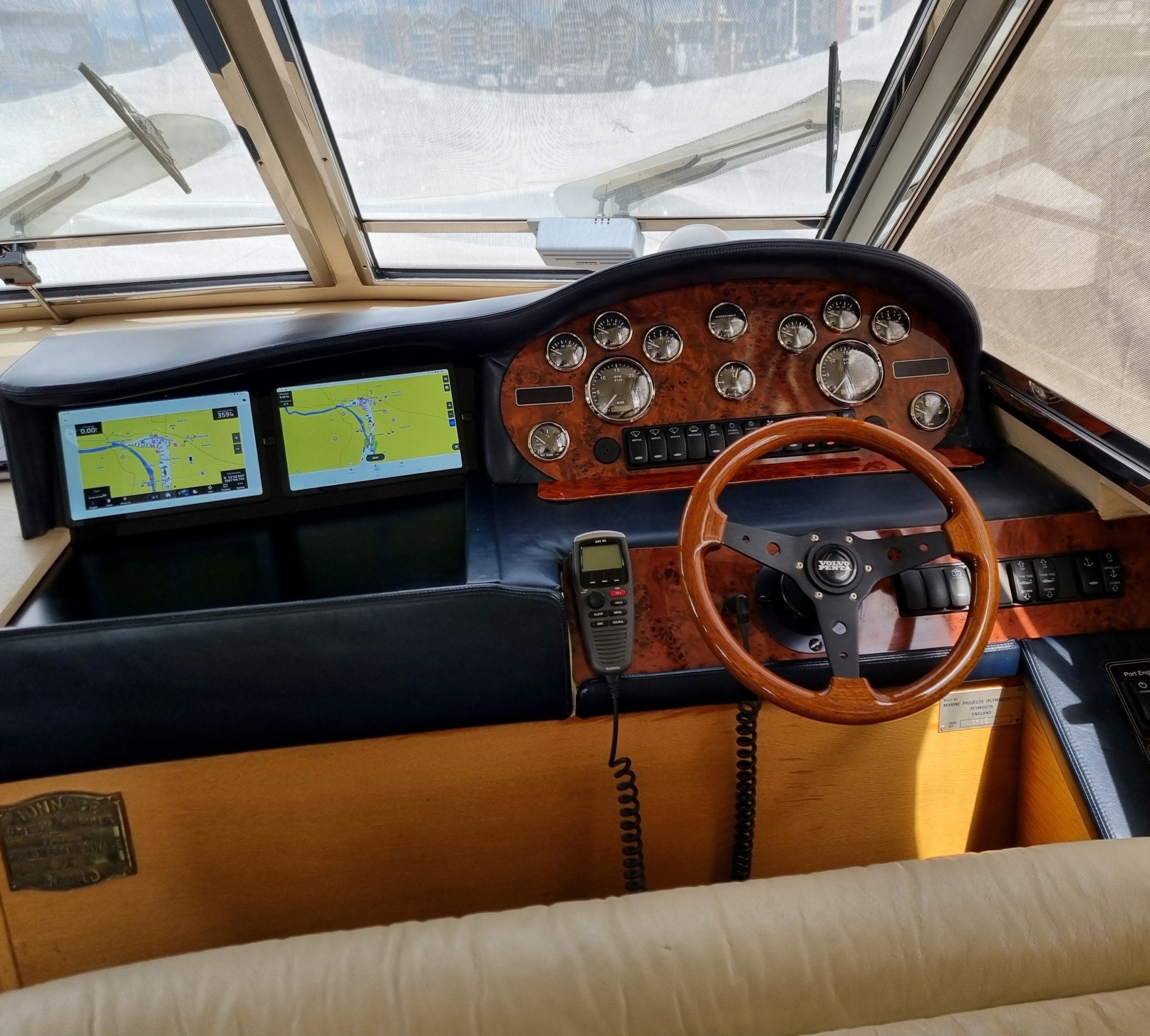
Removing the electronics left a nicely sized hole for some 10.4″ Android tablets. Black gloss Perspex was fixed to a ply frame with heavy duty Velrco to allow access to the dual USB socket behind the tablets.
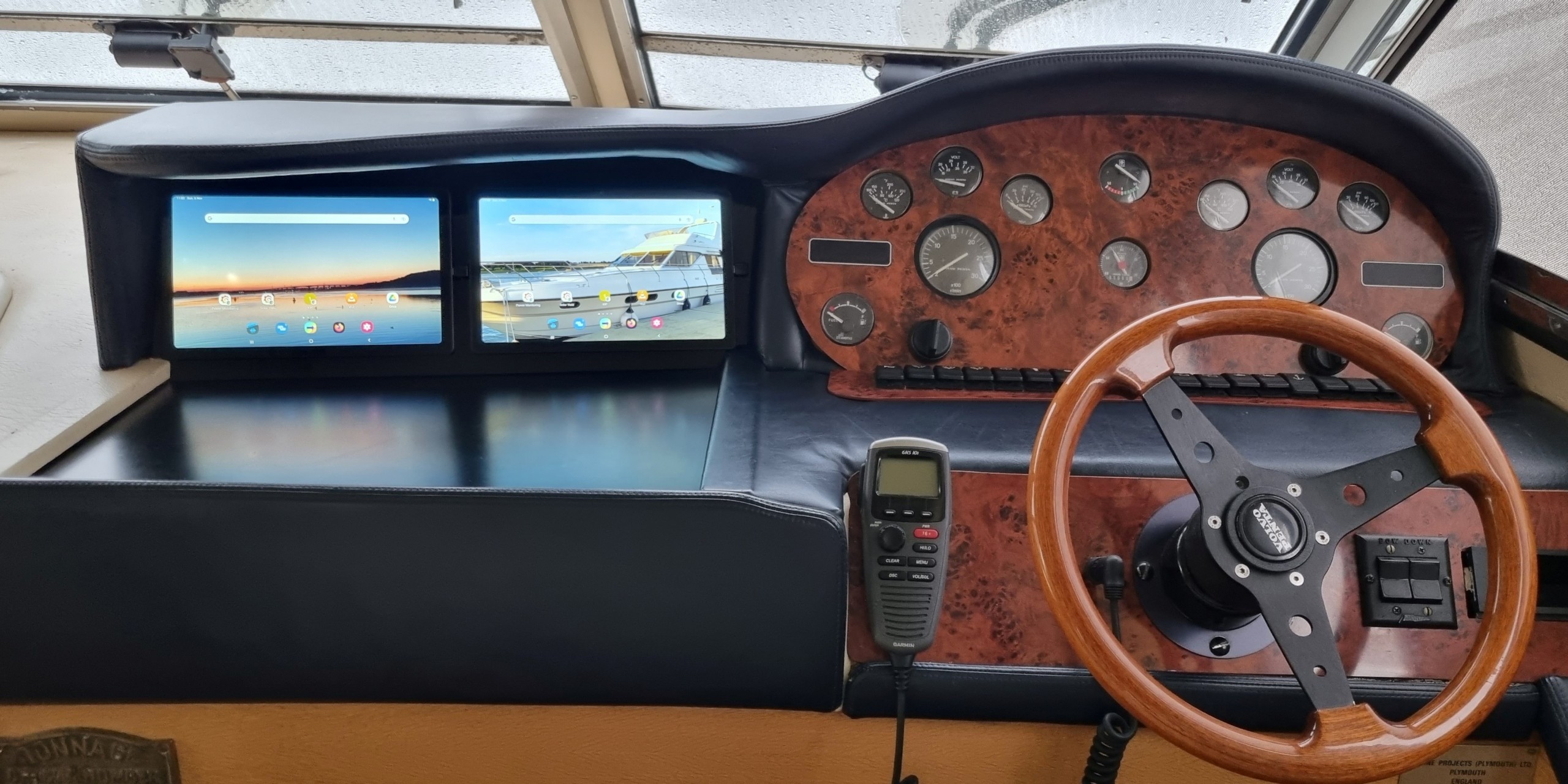
Both tablets fitted, with a thin strip of Perspex below the tablets for extra support. Either can be used as a stand alone plotter, a mirror of one of the flybridge MFD’s, a monitor for the Victron systems or anything else a tablet can do.
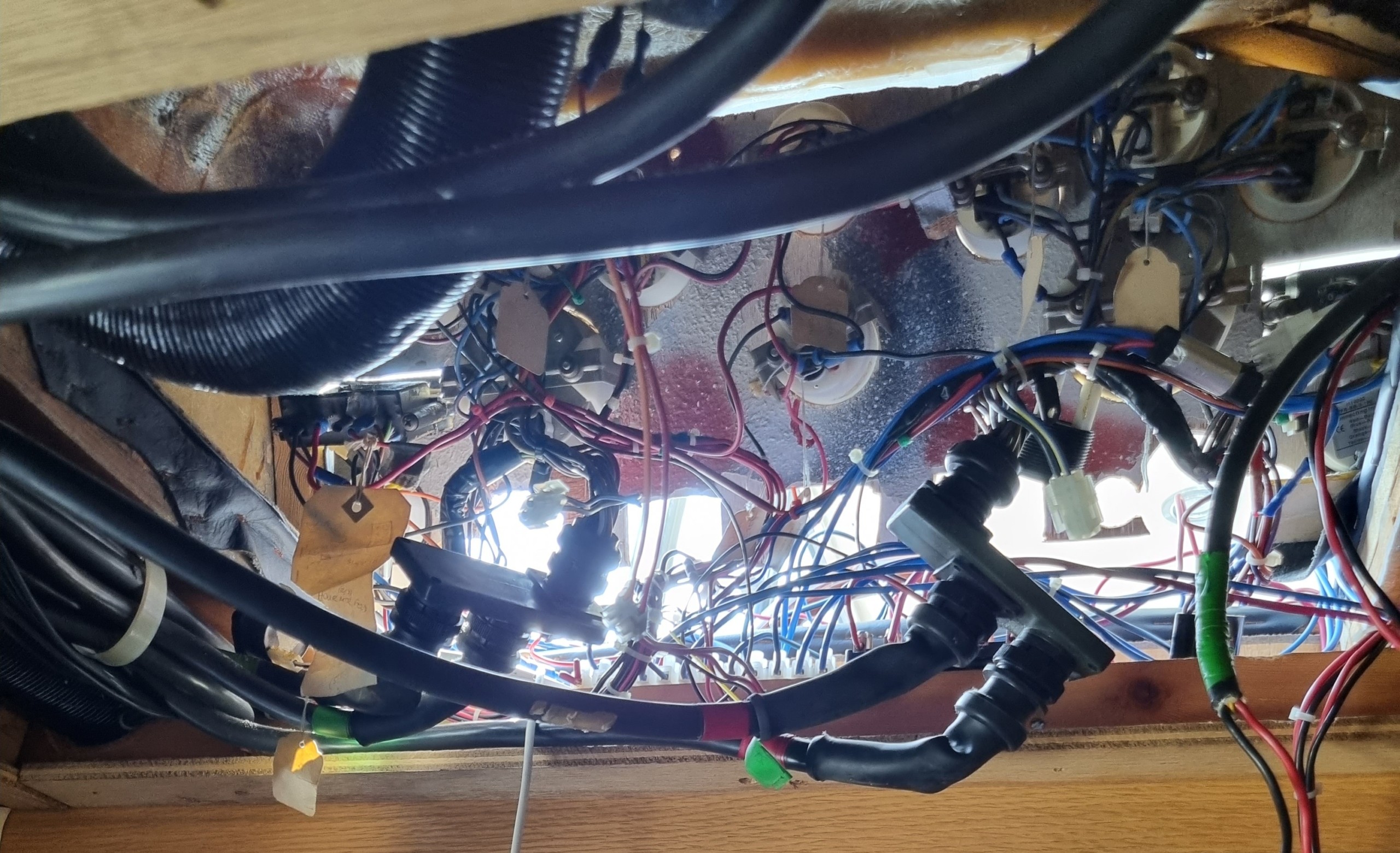
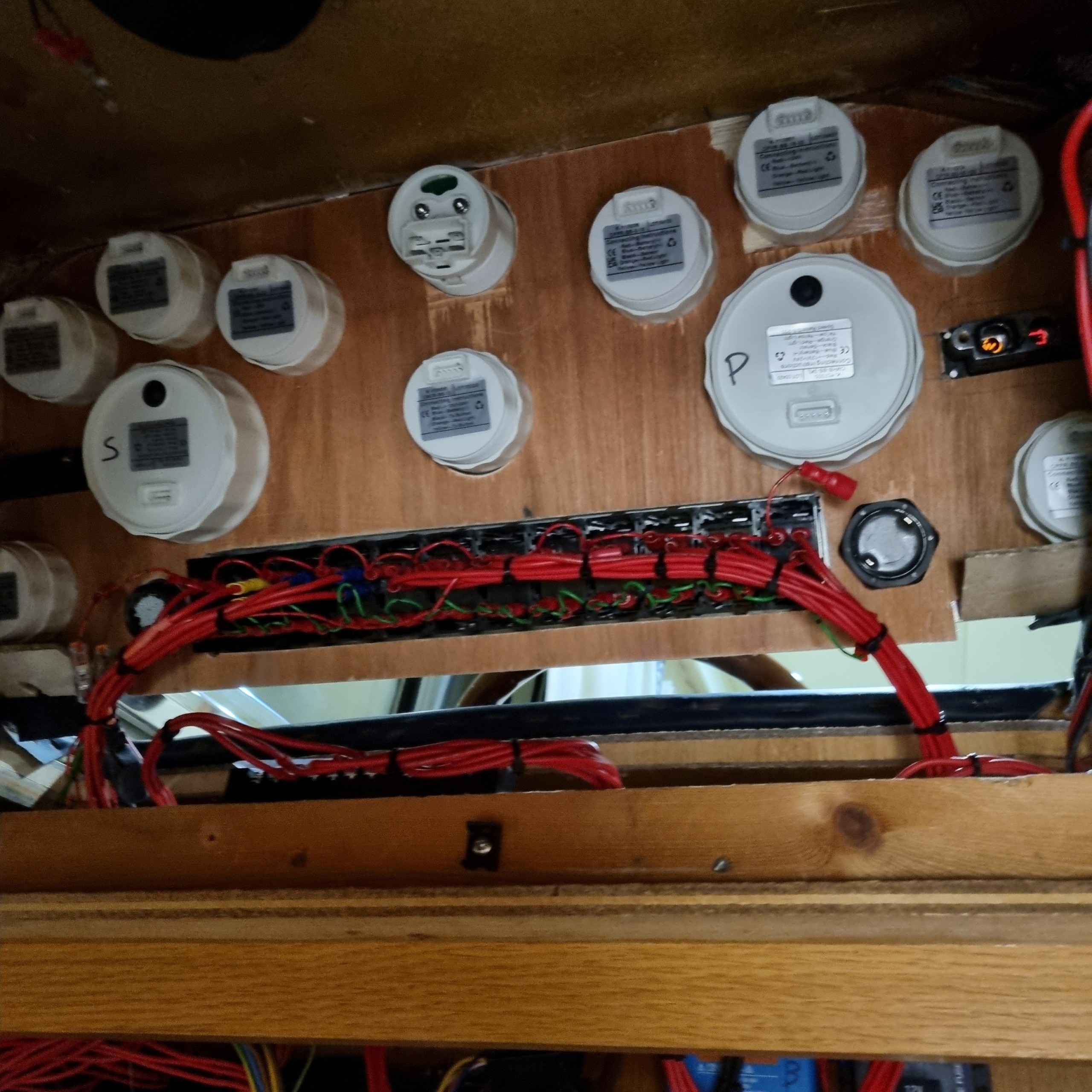
Removing the walnut effect panel reveals this mess. I don’t think carpentry was a previous owner speciality, neither was wiring.
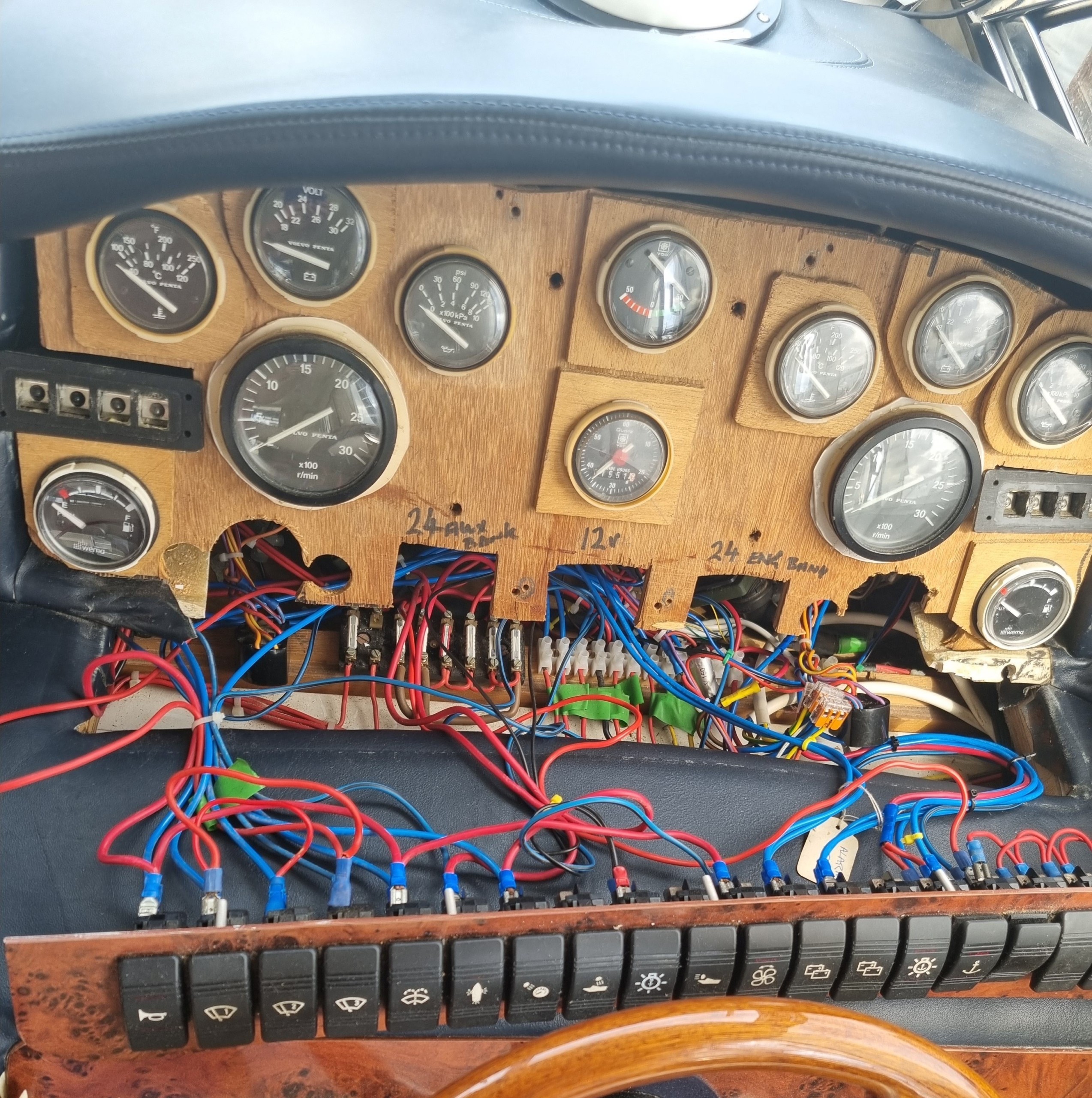
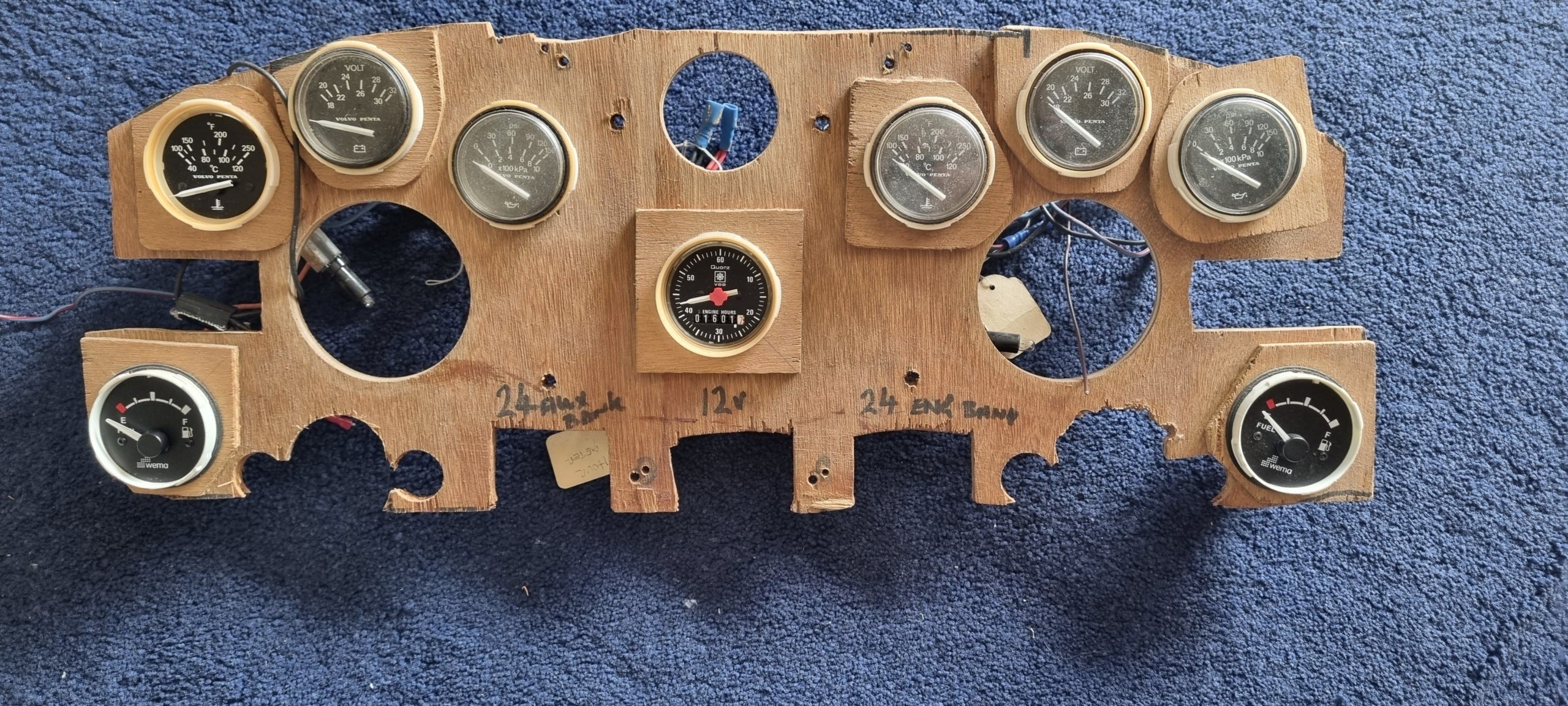
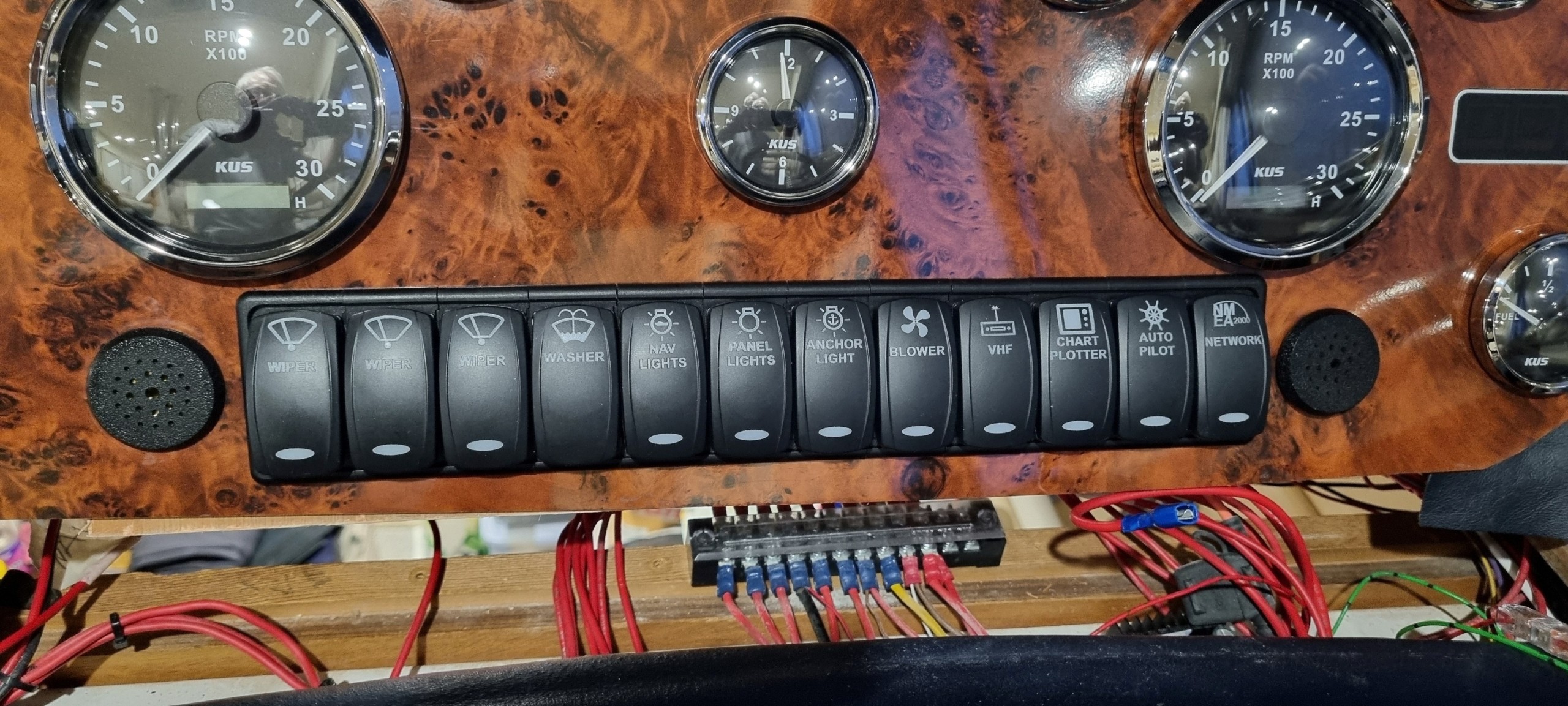
A new ply panel was fitted for the replacement gauges. New gauges are slightly bigger, so the holes have been enlarged accordingly. The new gauges secure the walnut effect panel in place. The switches are next to impossible to see as they are lying flat and they do not illuminate, so a slot was cut beneath the gauges for them. All of the switches were replaced by new ones that illuminate.
What a mess! The thick cables are the engine harnesses, one from each engine to the three way adapter, one from each adapter to the flybridge helm and the final one, chopped very short, going to the lower helm instruments. It’s a miracle anything worked.
The wiring and gauges were removed, a new ply panel was fitted and the new gauges were installed . New switches were installed and wired up.
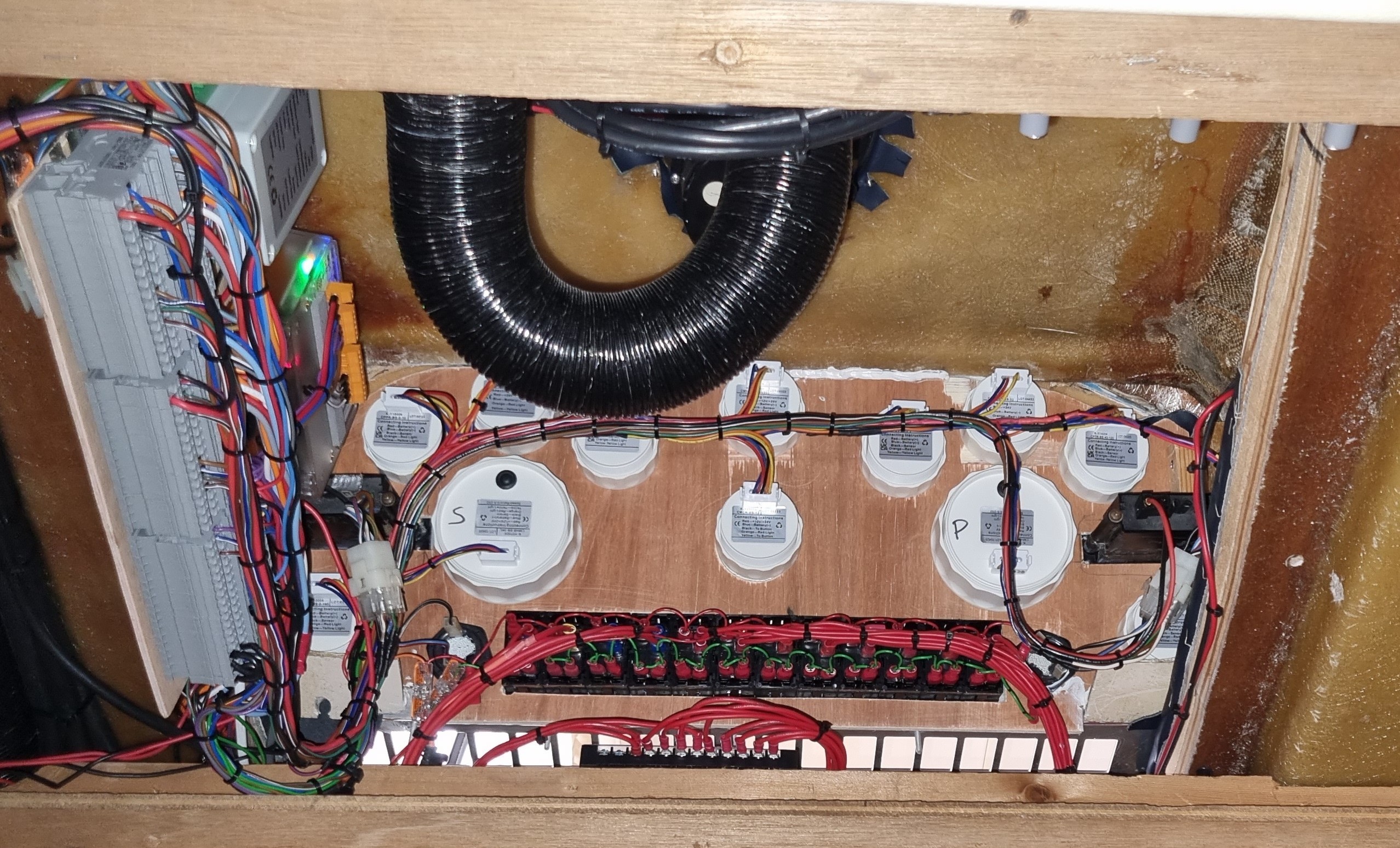
Made a new wiring harness for the gauges and connected it to the new DIN rail mounted Wago connectors.
The engine harnesses had been cut stupidly short, so they were extended using the original cable colours, soldered and heat shrunk. Bootlace ferules are crimped onto the ends of the wires, which are then inserted into the Wago connectors. A small screwdriver inserted into the square hole next to the wire releases it.
Top right in the picture is an Actisense EMU1, which is connected to the analogue engine sensors, converting the data to NMEA2000 and putting this onto the NMEA2000 network.

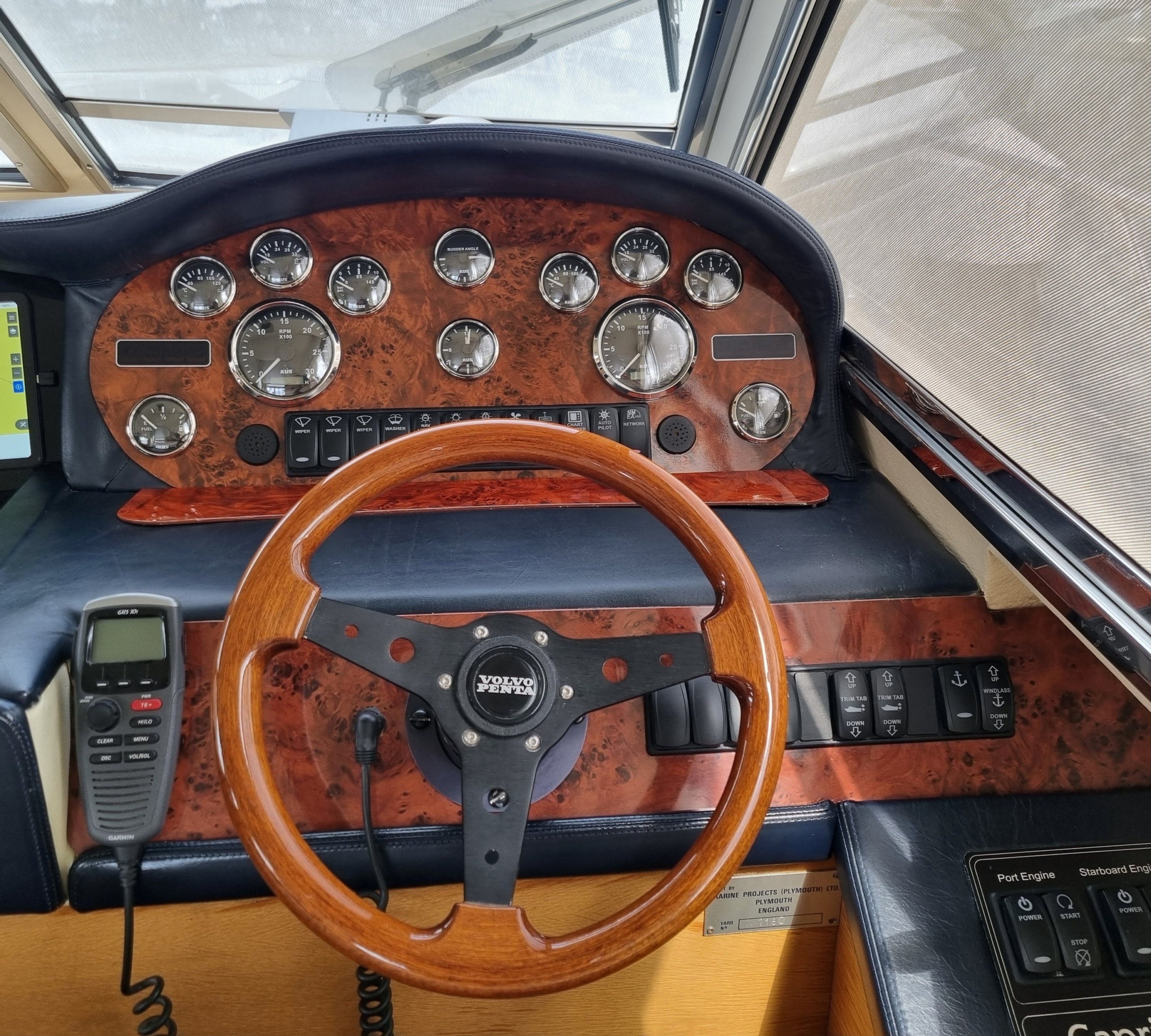
Lower helm, all finished.
Lower helm with Android tablets
Showing Victron Touch 70, Garmin GMI20s and Garmin autopilot overhead.
